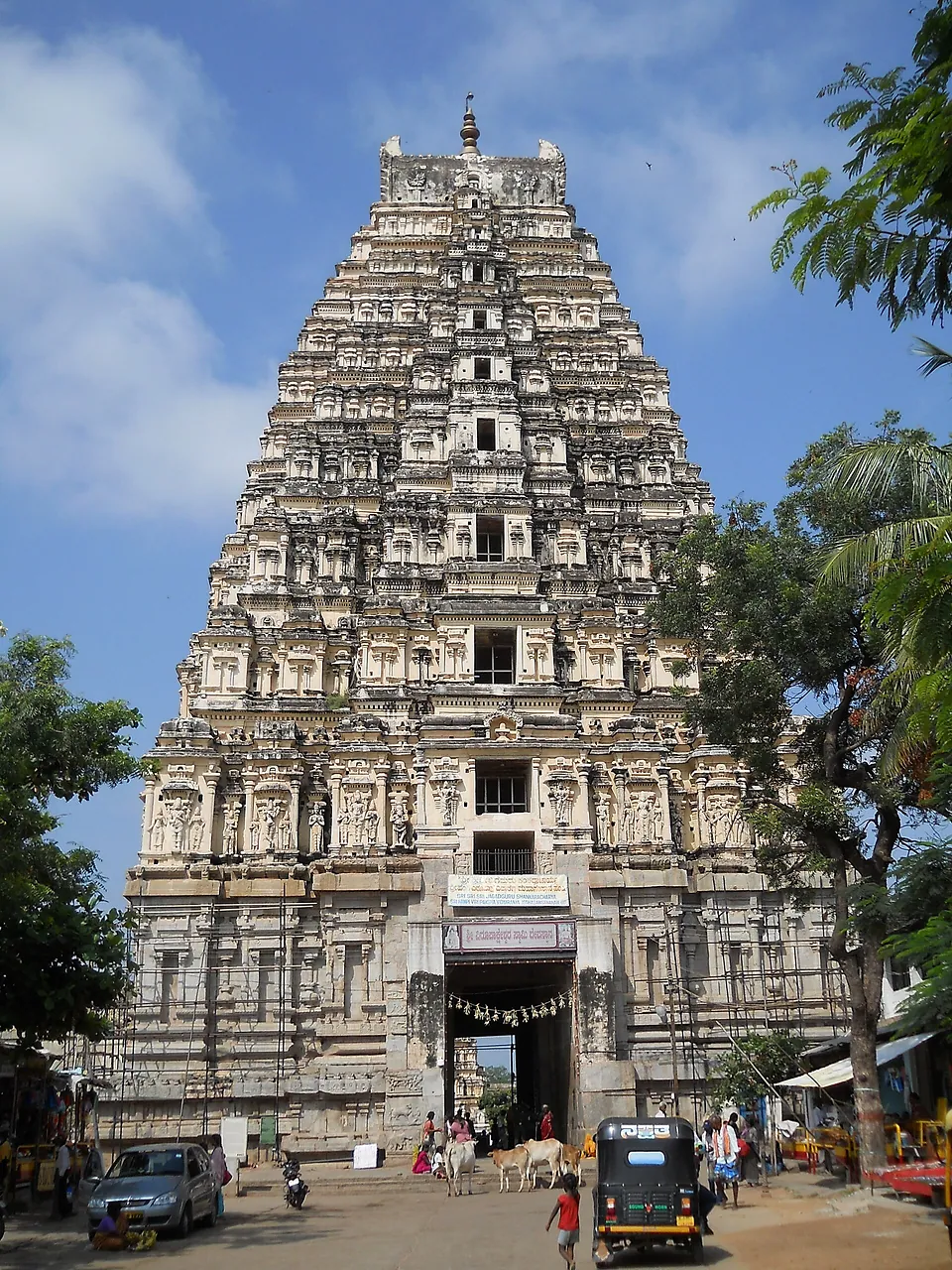
The Bazaar That Sold the World
A kilometre of colonnaded shopfronts where Persian horses, Golconda diamonds and Chinese silk changed hands, and the travellers who could not believe what they were seeing.
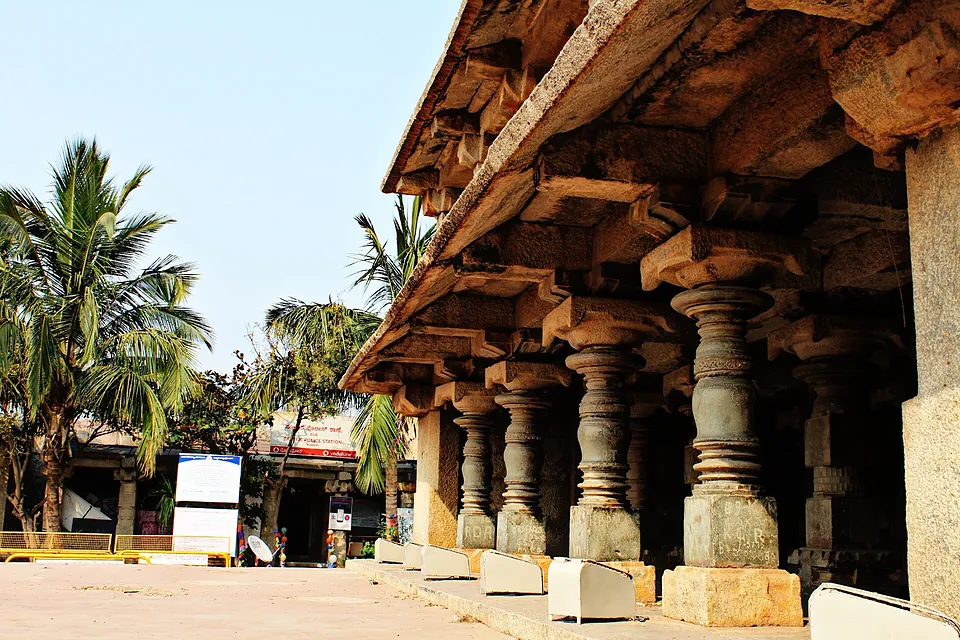 Photo: Kalyan07kumar (CC BY-SA 4.0)
The story
A Market a Mile Long
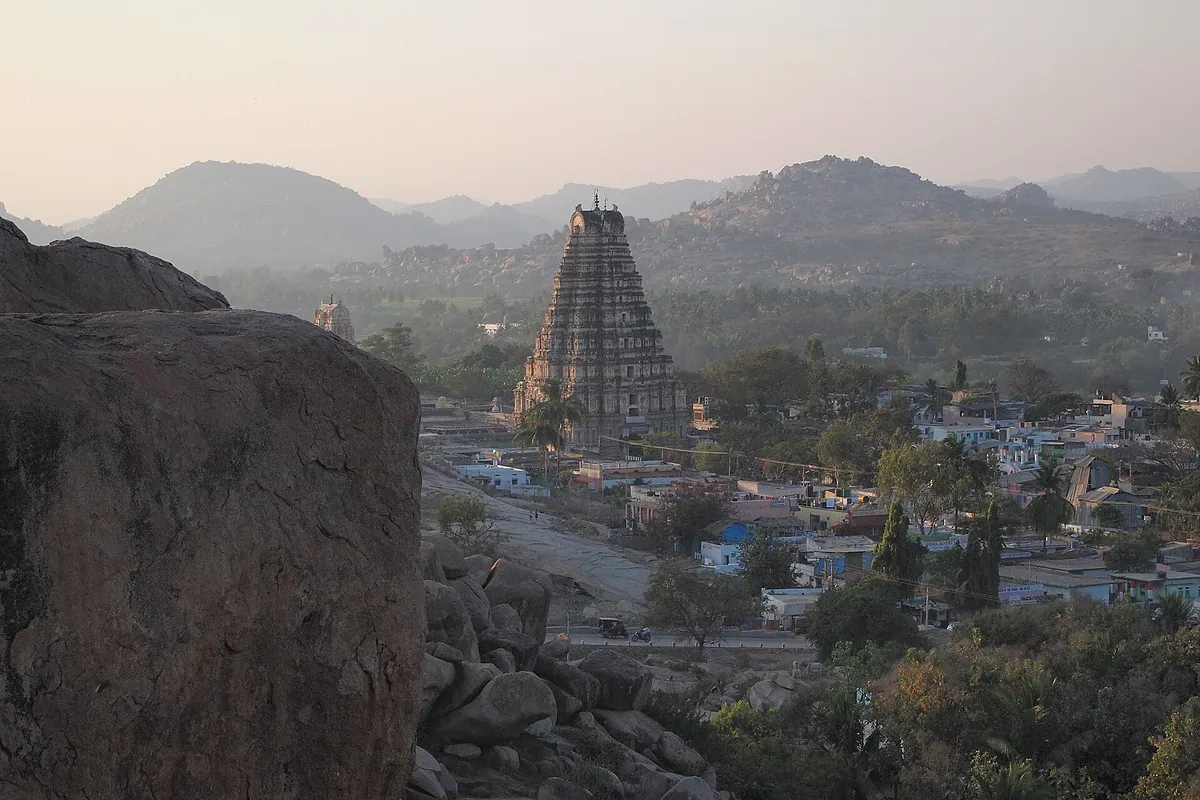
The street running east from the Virupaksha temple was the commercial spine of Vijayanagara. Both sides were lined with colonnades, and behind each arch was a shop. The scale is still legible: you can walk the length of it and watch the stone frame continue long after you expect it to stop.
Foreign visitors wrote about this street because it embarrassed the markets they knew at home. Domingos Paes, a Portuguese traveller who saw the city around 1520, described precious stones sold in the open. Abdur Razzaq, an envoy from Herat, counted the bazaars and gave up on comparisons.
They were shops where you could buy anything the known world made, and a great deal that it did not.
Hampi Heritage Trail
Horses and power
Why Horses Mattered
The most valuable thing traded here was not gems. It was horses. The Deccan does not breed cavalry mounts well, so Vijayanagara imported Arab and Persian horses through the west coast ports at enormous expense, and its wars depended on the supply.
That dependency shaped the empire's foreign policy: whoever controlled the ports controlled the cavalry, which is part of why the Portuguese arrival on the coast mattered so much so quickly.
What remains
The Frame Without the Noise
Families lived and traded along this street into the 2010s, when the area was cleared to protect the monuments. That clearance is still debated in Hampi, and you will hear both sides from people who live here.
What stands now is the architecture without its purpose: a row of empty colonnades pointing at a temple that is still full.