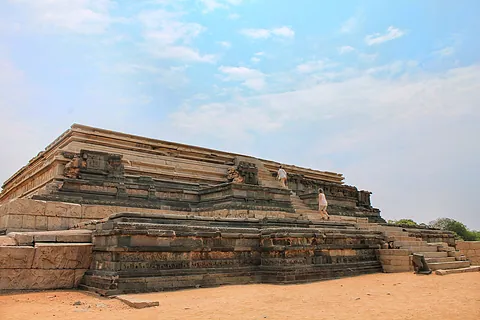
The Water That Built a Capital
Half a million people lived here through Deccan summers. The reason was not the temples. It was the aqueducts, tanks and channels under your feet.
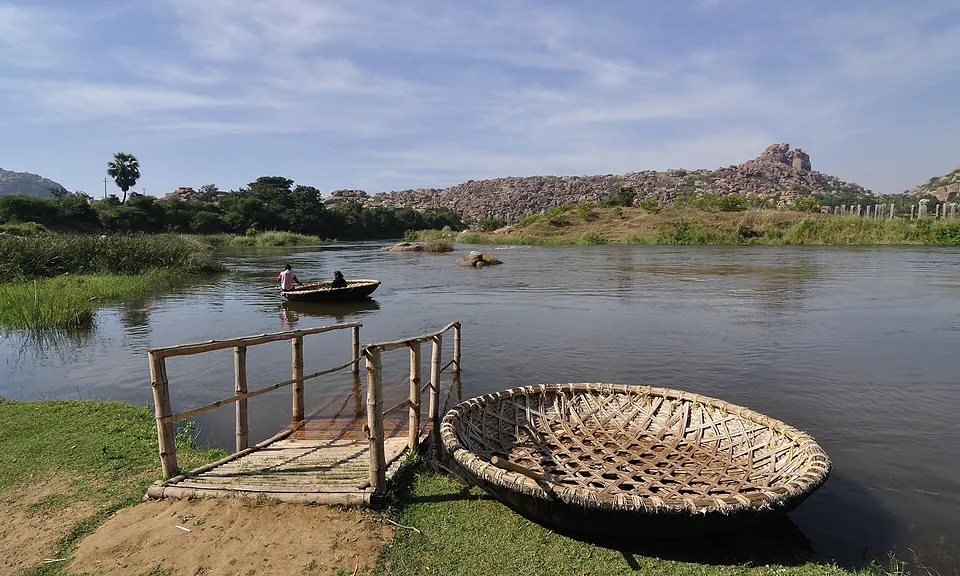 Photo: Dey.sandip (CC BY-SA 3.0)
The story
A Dry Place to Put a City
Hampi sits in one of the drier parts of Karnataka, on granite that holds nothing. The Tungabhadra runs past it, and everything the city managed to be was built on the work of getting that water up, across and into the places people lived.
The royal centre is threaded with stone channels. Some are open, some run under courtyards, and they feed tanks that are still watertight five hundred years later.
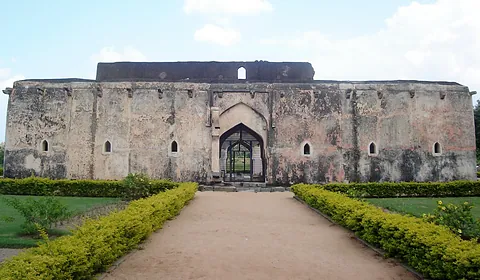
The stepped tank
Found in 1980
The stepped tank in the royal enclosure was dug out of the silt only in the 1980s. It is a precise pyramid of black schist steps, and the blocks are numbered with mason's marks showing where each one belonged, because the stone was cut elsewhere and brought here to be assembled.
That is a supply chain, recorded in the stone, for a bathing tank.