The Stone Chariot of Hampi
More than a monument, the Stone Chariot is the emblem of an empire, an exercise in showing off, and a reminder that the people who built it meant it to move.
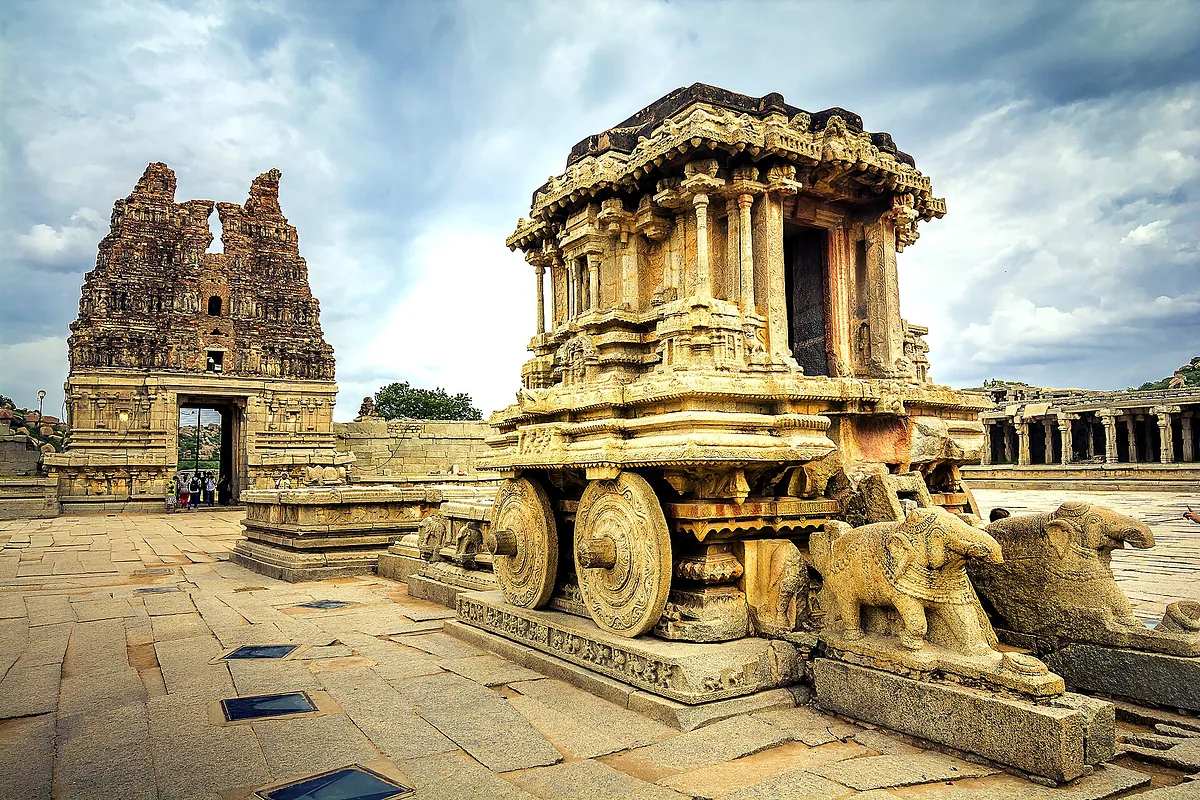 Photo: Ram Nagesh Thota (CC BY-SA 4.0)
The story
A City of Wonders
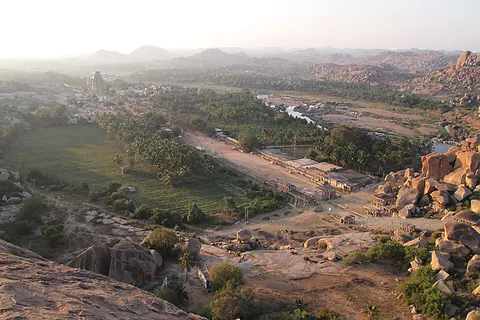
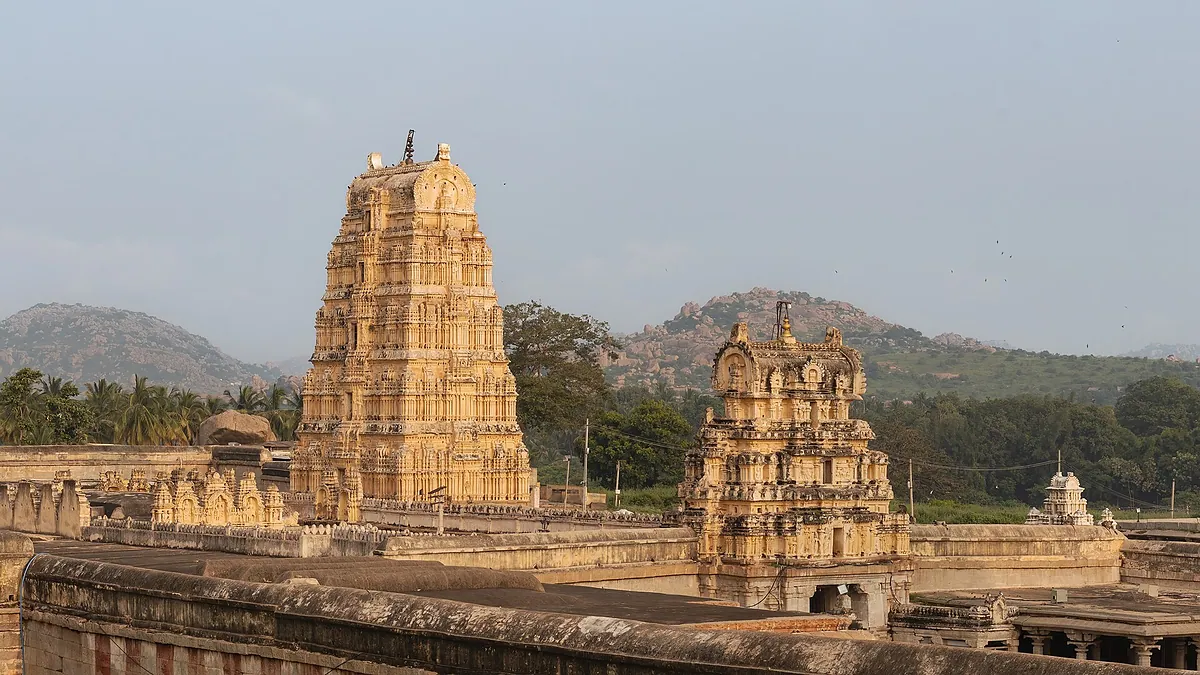
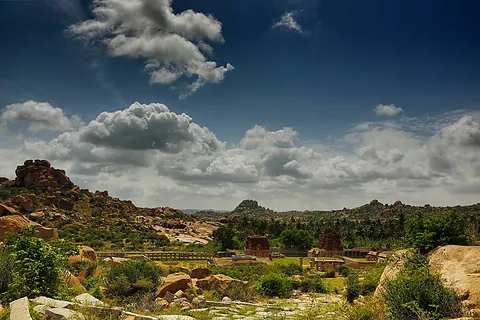
In the heart of Hampi, among granite boulders that look stacked by hand, stands the Vittala temple complex. It is the most ambitious thing the Vijayanagara empire built, and the chariot in its courtyard is the piece everyone photographs.
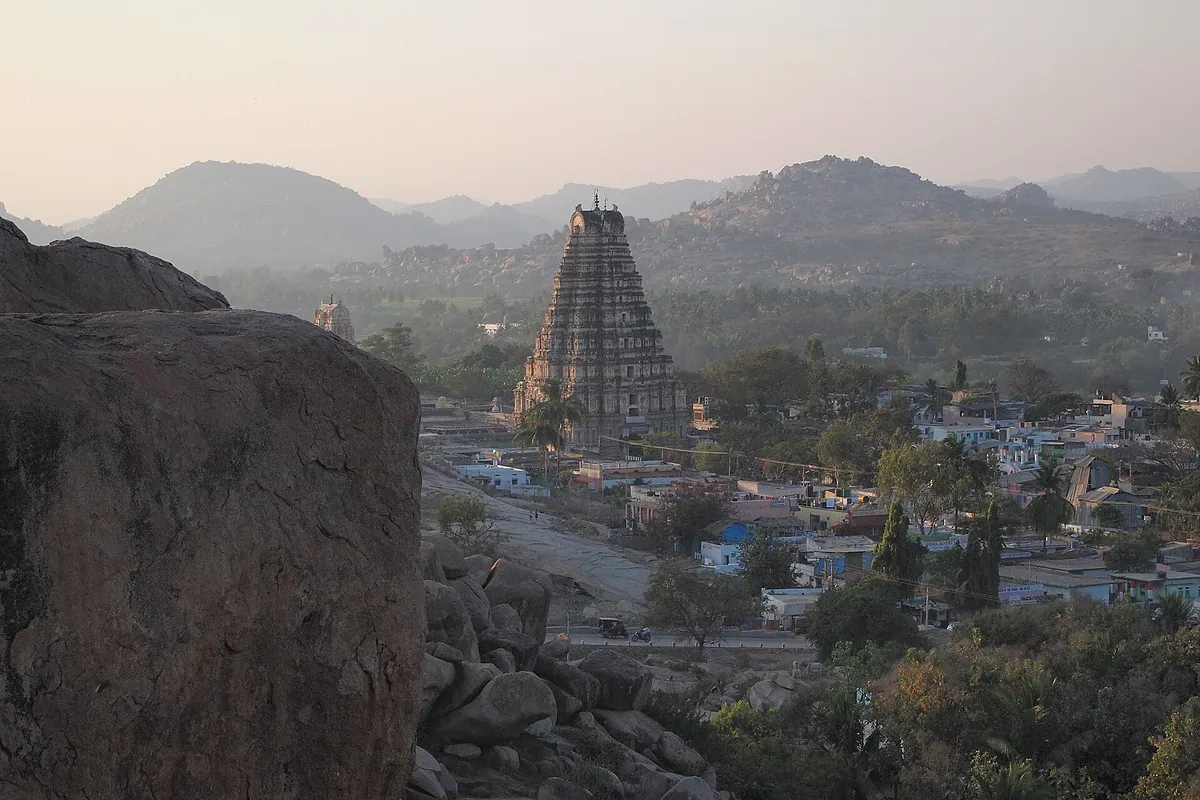
The complex went up in the sixteenth century, under Krishnadevaraya and the kings who followed him. By then Vijayanagara had been the dominant power in southern India for close to two hundred years, and its architects had stopped being modest. The temple's pillared halls were cut from single blocks. Its gateways were tall enough to be seen from across the river.
In stone, they captured movement; in silence, they left behind a song.
Hampi Heritage Trail
The chariot up close
A Masterpiece in Granite
The chariot is a shrine to Garuda, the eagle who carries Vishnu, and it faces the temple's main sanctum exactly as a real processional chariot would. It is not carved from one rock, which is the common claim. It is assembled from granite blocks, fitted so carefully that the joints disappear under the ornament.
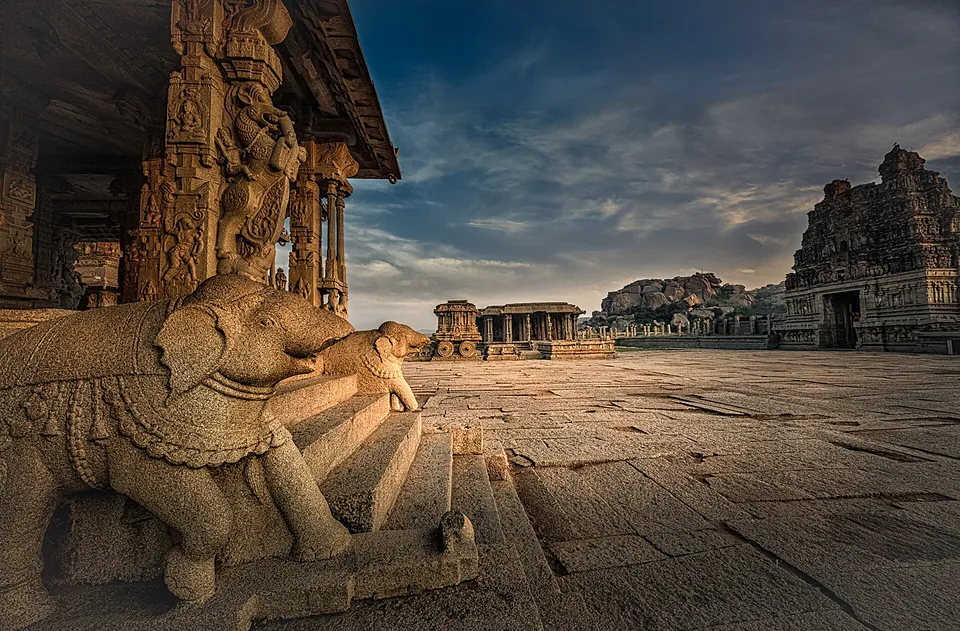
The wheels are the detail worth standing in front of. Each is a separate disc, carved with concentric floral bands, and each was mounted on an axle so that it could turn. They do not turn now; the wheels were fixed in place during later conservation work to stop them being pushed. The elephants at the front are a replacement too. The originals were a pair of horses, and you can still see the broken limbs of those horses behind the elephants' legs.
Belief and symbolism
Why a Chariot at All
South Indian temples put their gods on wheels. During festivals the deity leaves the sanctum and is pulled through the streets on a wooden chariot the size of a house, which is how a temple reaches people who cannot enter it. Building that chariot in stone, permanently, in the courtyard, makes a claim: this procession never stops.
Garuda sits where he always sits, facing his lord. The shrine that once held his image is empty now. What remains is the vehicle, which is the part the sculptors treated as the subject.
Artisans and ingenuity
The Hands That Cut It
Nobody recorded the names of the people who made this. What they left instead is evidence of method: granite is unforgiving, and the ornament here is cut to a depth that leaves almost no room for error.
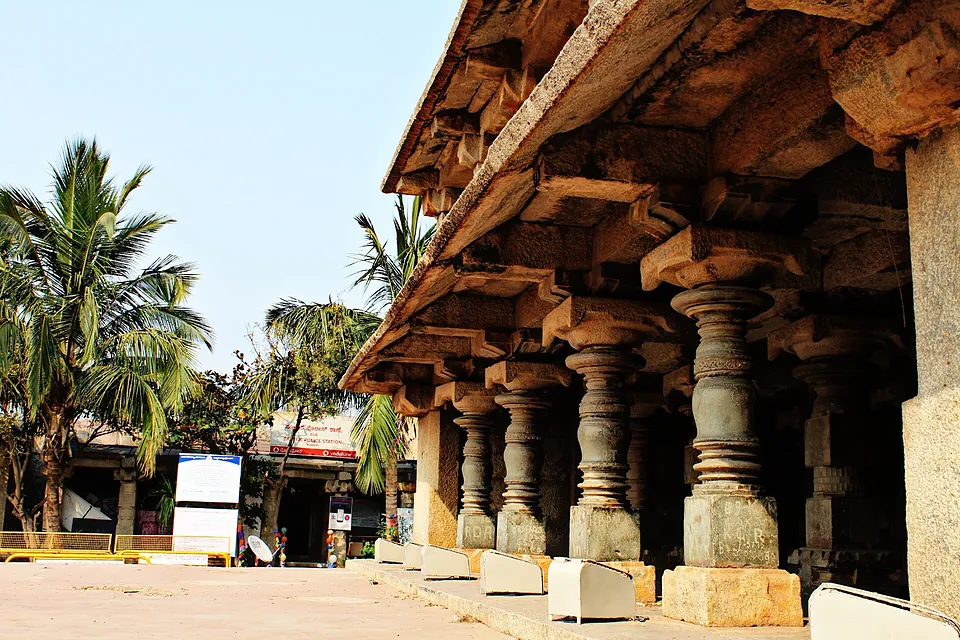
A few steps away, the temple's great hall has the musical pillars, slender columns that ring at different pitches when struck. Enough visitors tested them that the Archaeological Survey of India had to rope them off. The ringing is a property of the rock and the proportions the carvers chose, and it is the clearest evidence we have that these were people who understood their material completely.
Through the centuries
After 1565
In 1565 the Vijayanagara armies lost the battle of Talikota to a coalition of Deccan sultanates, and the city was systematically dismantled over the months that followed. The Vittala complex was damaged and abandoned. Hampi became a village among ruins, and stayed that way for three centuries.
The chariot survived because it was granite and because it was not worth melting down. It has since appeared on the Indian fifty-rupee note, which is how most people in India first see it.
Today and tomorrow
Standing in Front of It
Hampi became a UNESCO World Heritage Site in 1986, and the Vittala complex is now the most protected part of it. You reach the chariot on foot or by electric buggy from the gate; vehicles are kept away from the temple.
Go early. The granite takes colour from low light, and the courtyard is quiet enough to hear what the carvers were listening to.